No Balcony or Space for an Outdoor Unit? Air Conditioning Options for Sydney Apartments
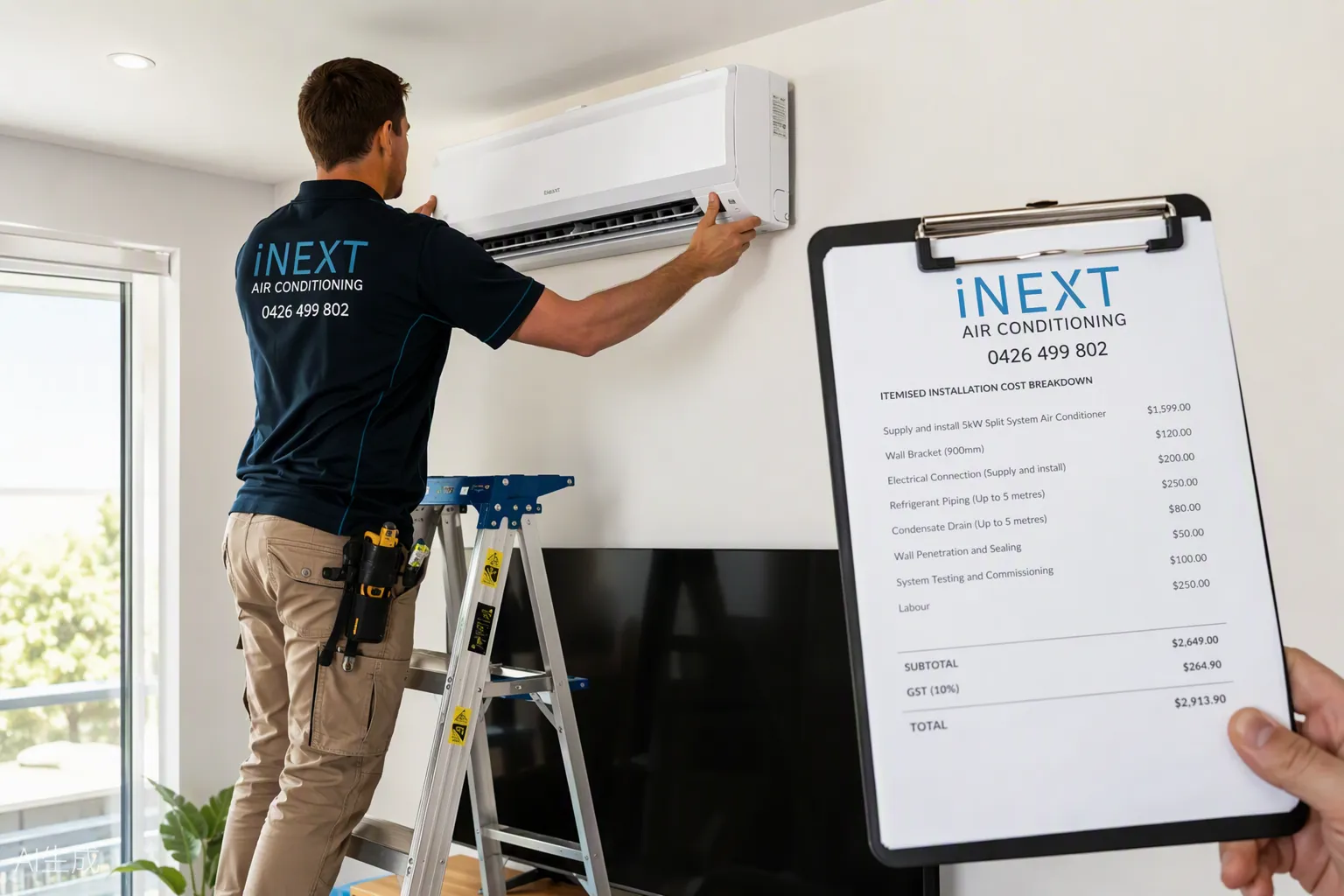
By iNext Air Conditioning · Updated November 2026 · Sydney, NSW
If you're searching for air conditioning apartment no outdoor unit Sydney, you still have cooling options. A portable refrigerated air conditioner, a suitable window unit or an approved outdoor-unit location elsewhere in the building may solve the problem. For permanent air conditioning installation Sydney, the first step is finding out whether your apartment has a safe, suitable and approved location for the outdoor equipment.
Living in a Sydney apartment without a balcony can make summer uncomfortable. The living room gets hot in the afternoon, the bedroom stays warm at night, and opening the windows does not always help.
Buying an air conditioner sounds simple until someone asks: "Where will the outdoor unit go?"
That is often where the trouble starts. Some buildings have fixed glass windows. Others have shared external walls, limited service areas or strict strata by-laws.
But there are ways around some of these problems. The right solution depends on your window layout, building rules, budget and the rooms you need to cool.
What is the best air conditioning option for an apartment without a balcony?
Quick answer: If there is no approved outdoor condenser location, a properly vented portable refrigerated air conditioner is often the simplest option. If your building has one suitable external location, a single split or multi-split system may provide more efficient, quieter cooling.
Do not buy a conventional split system until the proposed outdoor-unit location has been assessed.
| Cooling option | Outdoor condenser | Best for |
|---|---|---|
| Portable refrigerated air conditioner | No separate unit; window exhaust required | Renters and single rooms |
| Window air conditioner | No separate condenser; external airflow required | Suitable approved windows |
| Single split system | Yes | One main room |
| Multi-split system | Yes, one shared condenser | Multiple rooms |
| Ducted air conditioning | Usually yes | Apartments with suitable ceiling and plant space |
| Fans and passive cooling | No | Lower-cost comfort improvements |
Why is air conditioning installation difficult in Sydney apartments?
A normal split system moves heat from inside your apartment to an outdoor condenser. That condenser needs a suitable place to release heat into the outside air.
In a house, the unit might sit beside a driveway or against an external wall. In a city apartment, the only outside surfaces might belong to the building's common property.
This can create problems for apartments in Sydney CBD, Pyrmont, Waterloo, Zetland, Chatswood and North Sydney.
Space is not the only concern. The unit needs enough ventilation, suitable drainage, electrical supply and room for servicing.
Noise and vibration also matter. A condenser beside a neighbour's bedroom window could lead to complaints.
Important: A conventional outdoor condenser should not be hidden in a sealed cupboard, unventilated ceiling void or ordinary indoor storage room. It needs a properly designed heat-rejection location.
Can you cool a Sydney apartment without installing an outdoor unit?
Yes, although the options are more limited if you want genuine refrigerated cooling.
1. Portable refrigerated air conditioners
A portable refrigerated unit contains its cooling equipment in one indoor cabinet. It can be moved between suitable rooms, although it is not completely installation-free.
The exhaust hose must be connected to a suitable window opening to push hot air outside. Without proper venting, the unit will not cool the apartment effectively.
This can be a sensible option for renters in Surry Hills or Darlinghurst who cannot make permanent changes to the building.
The trade-offs include indoor noise, floor space, electricity use and the need to seal the window opening carefully.
2. Window-mounted air conditioners
Window units contain the cooling equipment in one cabinet. They do not need a separate outdoor condenser, but part of the unit still needs access to outdoor air.
They can work in some older apartments with suitable window openings.
However, fixed-glass windows, unusual window shapes and building appearance rules can make this option unsuitable.
3. Evaporative coolers and fans
Evaporative coolers use water to cool the air. They are not the same as refrigerated air conditioners.
On dry days, an evaporative cooler may improve comfort. But during Sydney's humid summer weather, the added moisture can make a room feel sticky.
Fans do not lower the air temperature in the same way as air conditioning. They help people feel cooler by moving air across the skin.
If you only need modest relief, shading the windows and using fans may be cheaper than installing permanent air conditioning.
Where can a split system outdoor unit go if there is no balcony?
Some apartment buildings have alternative positions for outdoor condensers.
Possible locations include:
- A designated building plant area.
- An approved external service ledge.
- A rooftop location with safe maintenance access.
- A purpose-built, adequately ventilated equipment space.
Each location must be checked before installation.
For example, placing a condenser on a roof may look simple, but the refrigerant pipes could be too long for the selected system.
A rooftop installation may also require structural checks, access arrangements and written approval from the owners corporation.
The outdoor equipment should never block an emergency exit, common walkway or required ventilation opening.
A qualified installer can assess the air conditioning outdoor unit location before recommending a system.
Is multi-split air conditioning suitable for apartments with limited outdoor space?
Often, yes. A multi-split system can be useful when there is space for one outdoor unit but not several.
With a standard split system, each indoor unit normally has its own outdoor condenser. A multi-split system can connect several indoor units to one shared outdoor unit.
This arrangement can suit a two-bedroom apartment where the owner wants separate temperature controls in the lounge room and bedrooms.
It does not remove the need for outdoor equipment, but it can reduce the number of outdoor units.
A shared condenser may be larger than a single-room unit. It still needs enough airflow and a suitable installation location.
The final design depends on room sizes, pipe lengths, electrical supply and the combined cooling demand.
For apartment owners considering multiple rooms, a multi-split arrangement can be worth comparing with individual split systems.
Can ducted air conditioning be installed in a Sydney apartment without a balcony?
Sometimes, but the apartment must have suitable ceiling space and a compliant location for the outdoor equipment.
Ducted systems use concealed indoor equipment and ceiling vents to distribute conditioned air.
This can be attractive in a modern apartment because it keeps most of the equipment out of sight.
However, conventional refrigerated ducted systems still need to reject heat outside.
A false ceiling alone does not solve that problem.
If the apartment has enough ceiling space, suitable structural arrangements and an approved condenser location, professional ducted air conditioning installation Sydney may be possible.
Owners comparing whole-apartment systems can also explore ducted air conditioning Sydney for details about system design, installation and zoning.
For a compact apartment without ceiling space or outdoor equipment access, a ducted system is unlikely to be the most practical choice.
Do you need strata approval to install air conditioning in a Sydney apartment in 2026?
You should check the building's strata by-laws before arranging permanent installation.
In NSW, some reverse-cycle air conditioning installations may fall within the minor renovations approval framework. Other installations may need more extensive approval, particularly where they affect common property, building structure, waterproofing or external appearance.
Planning permission and strata approval are separate issues. A proposal that does not require development consent may still require owners corporation approval.
What should you prepare for a strata application?
- The proposed air conditioner model and specifications.
- A drawing showing indoor and outdoor unit positions.
- Details of refrigerant pipework and drainage.
- Electrical connection information.
- Noise and vibration considerations.
- Details of the installation contractor and licences.
- Maintenance access and responsibility arrangements.
If you rent, get permission from the property owner before changing the building.
Getting the necessary approval before buying expensive equipment can prevent unnecessary costs and delays.
NSW guidance: Approval requirements depend on the actual installation and current strata by-laws. Owners should confirm the applicable requirements with their strata manager or owners corporation.
How much does air conditioning cost for a Sydney apartment in 2026?
The purchase price is only one part of the total cost. Installation complexity can make a substantial difference, especially in apartments with difficult outdoor access.
| Cooling system | Indicative 2026 budget (AUD) |
|---|---|
| Portable refrigerated air conditioner | $400–$1,200 |
| Window air conditioner | $500–$1,500 before complex fitting |
| Installed 2.5kW split system | $1,500–$2,200 |
| Installed 5–6kW split system | $2,200–$3,200 |
| Installed 2-head multi-split | $4,500–$6,500 |
| Installed 3–4-head multi-split | $6,500–$9,500 |
| Ducted system | From around $8,000 for suitable installations |
These are indicative budgets, not guaranteed apartment quotes. Fixed-system figures reflect iNext's published 2026 standard-installation guidance. Portable and window-unit figures are broad budgeting allowances, not verified current offers. Difficult access, electrical upgrades, extended pipework and specialised equipment can increase costs.
What makes apartment air conditioning more expensive?
Access is one of the biggest factors. A condenser installed at ground level may be much easier to fit than one requiring rooftop access or lifting equipment.
Long pipe runs, additional drainage work and switchboard upgrades can also increase the final price.
Upper ends of selected installation budget ranges. These are not a comparison of equal cooling capacities.
Which air conditioner should you choose for your apartment?
Use this simple tool to narrow down the options based on your apartment.
A starting point for planning, not a substitute for an installation assessment.
Is there a possible outdoor condenser location? How many rooms need cooling? Is permanent installation permitted? Find My Cooling OptionThe tool provides general guidance only. It cannot establish whether your building meets installation requirements.
Realistic Sydney apartment cooling scenarios
Apartment layouts vary considerably across Sydney. These examples show how the right solution can change with the building.
Example 1: A renter in Surry Hills
Imagine a tenant living in a small studio with no balcony and a suitable opening window.
The tenant wants relief during summer but cannot make permanent changes to the building.
A correctly sized portable refrigerated air conditioner with a suitable window exhaust kit may be the simplest choice.
The tenant should still check whether the kit can be fitted safely and whether landlord or building rules restrict its use.
Example 2: A two-bedroom apartment in Chatswood
An owner wants cooling in the lounge room and two bedrooms. The building has one approved condenser location.
A multi-split system could serve all three rooms with one outdoor unit, subject to appropriate system sizing and the available space.
The owner would need to compare the installed cost, noise, pipework layout and long-term electricity use before proceeding.
These are illustrative scenarios, not verified iNext customer jobs or testimonials.
What should you check before buying air conditioning for a small apartment?
A common mistake is choosing an air conditioner based only on the size of the room.
Two bedrooms with identical floor areas can need different cooling capacities.
A west-facing bedroom with large windows may become much hotter in the afternoon than a shaded south-facing bedroom.
Check these factors before buying
- Windows: Large, unshaded windows can increase heat gain.
- Ceiling height: Higher rooms contain more air to cool.
- Insulation: Poor insulation makes indoor temperatures harder to control.
- Room layout: Open-plan areas may need different system sizing.
- Noise: Portable units can be intrusive in bedrooms.
- Electricity: Some fixed systems require a dedicated electrical circuit.
- Approvals: Permanent installations may affect common property.
A system that is too small may struggle during summer. An unnecessarily large system can cost more upfront and may not deliver the best comfort or efficiency.
How can iNext Air Conditioning help Sydney apartment owners?
When outdoor space is limited, choosing the right air conditioner starts with a proper assessment.
iNext Air Conditioning provides air conditioning installation services across Sydney, including split, multi-split and ducted systems.
For an apartment installation, the important questions include where the outdoor unit can be positioned, whether the pipework can reach that location and how the system will affect nearby apartments.
An assessment should also consider cooling capacity, electrical supply, drainage, access and the building's approval requirements.
For a one-bedroom apartment, a single split system may be enough. For several rooms with just one available condenser location, a multi-split system may be more suitable.
If no compliant external location exists, that should be established before purchasing fixed equipment.
iNext's published service information describes on-site assessments, system planning and written installation quotations.
Need Air Conditioning for Your Sydney Apartment?
No balcony? Limited outdoor space? Unsure about strata approval? Explore the installation options with iNext Air Conditioning before choosing your system.
Explore Installation OptionsFrequently asked questions about apartment air conditioning in Sydney
Can I have air conditioning in an apartment with no balcony?
Yes. Portable refrigerated units with suitable window exhausts can be an option. A permanent split system may also be possible if the building has another approved outdoor condenser location.
Is there a split system that does not need an outdoor unit?
Conventional split systems require an outdoor condenser. Some specialised self-contained units use external ventilation openings instead, but they still require heat to be rejected outside and may require building approval.
Can an outdoor air conditioner go inside a cupboard?
Not inside an ordinary sealed cupboard. A conventional condenser needs proper airflow and heat rejection. Any specialised enclosure must meet the equipment and ventilation requirements.
Can I place an outdoor air conditioner on the apartment roof?
Potentially, if the roof is suitable and the necessary permissions are obtained. Pipework distance, structural support, access, noise and servicing must also be assessed.
Can a multi-split system cool three rooms?
Yes. Suitable multi-split systems can connect several indoor units to one outdoor condenser. Capacity and compatibility depend on the selected equipment and room requirements.
Are portable air conditioners good enough for Sydney summers?
They can work well in properly sized and vented rooms. Their performance may be limited in larger spaces, poorly insulated apartments or rooms with substantial afternoon sun.
Can ducted air conditioning work in an apartment?
Yes, in some apartments with suitable ceiling space, services access and an approved outdoor condenser location. It is not practical in every building.
Do I need NSW strata approval for air conditioning?
Often, yes. The approval process depends on the work, common property impacts and the building's by-laws. Check with the owners corporation before starting permanent installation.
Final verdict: What is the best air conditioning option if your Sydney apartment has no outdoor space?
If your apartment has no balcony and no approved place for an outdoor condenser, a properly vented portable refrigerated air conditioner may be the most realistic starting point.
If the building has one suitable outdoor position, a single split system or multi-split system may provide better long-term comfort.
Ducted air conditioning is worth considering only when the ceiling layout, outdoor equipment location and building approvals make it practical.
The smartest choice is not necessarily the largest or most expensive air conditioner.
It is the system that fits your apartment, meets the necessary requirements and provides reliable cooling without creating new problems.
Check the building rules and available installation space first. Then choose the equipment.
Get a quote
Free on-site quotes across Sydney — call iNext Air Conditioning on 0426 499 802.